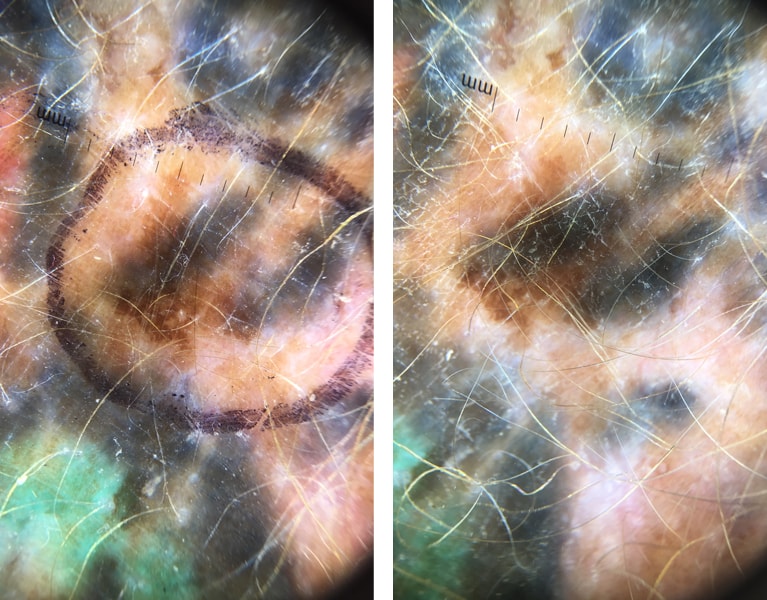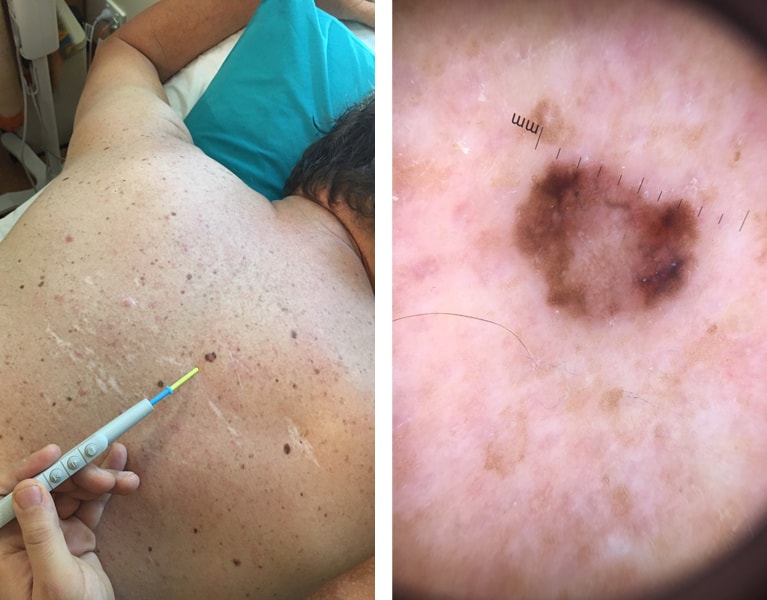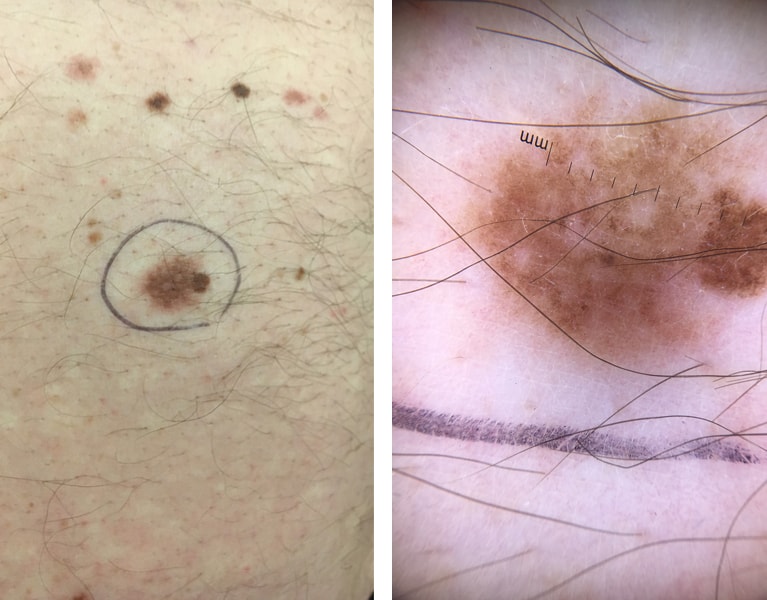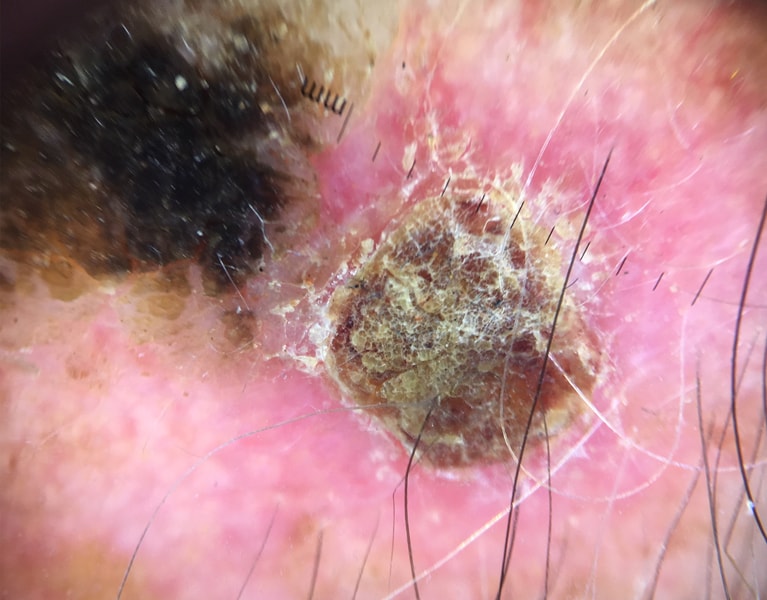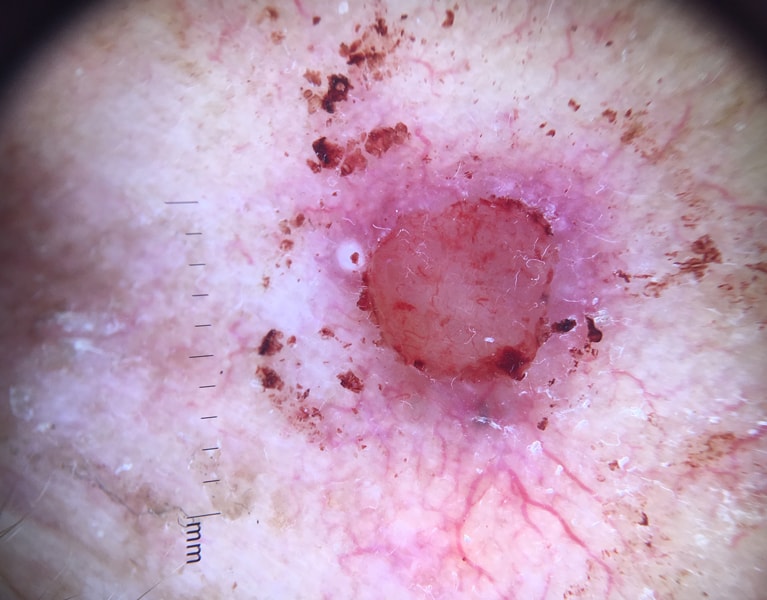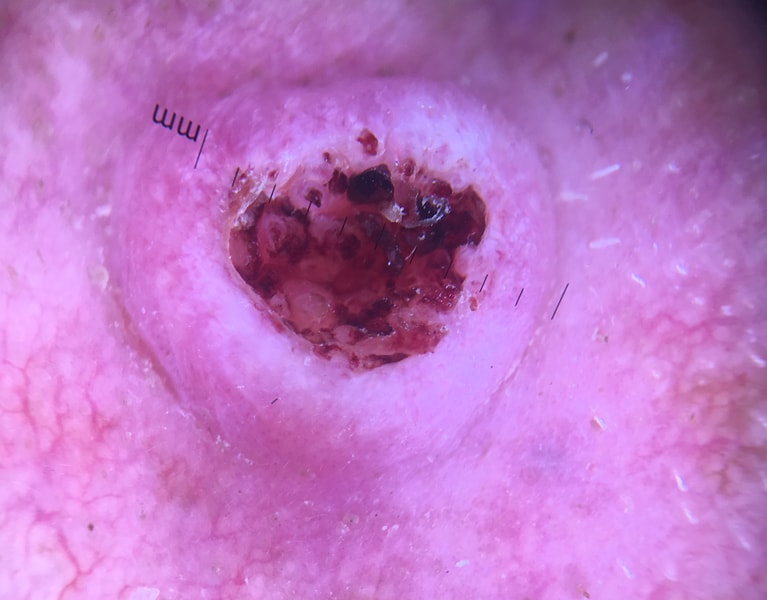
Skin cancer involves the uncontrolled growth of cells within the skin. This can result in local growth, bleeding and ulceration and, in some cases, the spread of cancer cells to other parts of the body.
A number of factors can contribute to the development of skin cancer, including fair complexion, cumulative and intermittent exposure to ultraviolet (UV) radiation, ionising radiation and immunosuppression.
There are many different forms of skin cancer, but the most common types include basal cell carcinoma (BCC), squamous cell carcinoma (SCC) and melanoma.
Basal cell carcinoma (BCC)
Basal cell carcinoma is the most common type of skin cancer. BCCs generally grow slowly and are locally invasive, meaning they can progressively damage the surrounding tissue if left untreated. They may also bleed or ulcerate.
There are several subtypes of BCC. Superficial BCCs may be suitable for topical treatments, curettage or surgical excision, while nodular BCCs, the most common subtype, are commonly treated surgically. Pigmented BCCs can sometimes resemble other pigmented skin conditions, including melanoma.
Other subtypes can behave more aggressively and extend further beneath the skin than their visible appearance suggests, making appropriate diagnosis important when determining treatment.
Squamous cell carcinoma (SCC)
Squamous cell carcinoma develops from the squamous cells of the skin and has a greater potential to spread than BCC.
Some SCCs develop from precursor or early-stage lesions. These include actinic keratosis, also known as solar keratosis, and Bowen’s disease, a superficial form of SCC.
Actinic keratoses commonly appear as scaly red patches on sun-exposed skin. Depending on the individual lesion, treatment may include cryotherapy, electrosurgery, topical medication or photodynamic therapy.
Bowen’s disease is diagnosed through biopsy and may be treated using topical therapies, curettage or surgical excision.
Invasive SCC occurs when abnormal cells extend beyond the outer layer of the skin into deeper tissue. Different subtypes can behave differently, so accurate diagnosis is important when determining treatment and follow-up.
Melanoma
Melanoma develops from melanocytes, the cells responsible for producing pigment in the skin. Although less common than BCC and SCC, melanoma has greater potential to spread to other parts of the body.
A number of factors can increase the likelihood of developing melanoma. These include a changing mole, significant childhood or intermittent UV exposure, having numerous or atypical moles, fair skin, a previous melanoma or other skin cancer, and a family history of melanoma.
Melanoma can occur in different forms, including superficial spreading melanoma, nodular melanoma, lentigo maligna melanoma and acral lentiginous melanoma, which may occur on the hands, feet or nails.
Early detection is particularly important. The outlook depends on several factors, including the depth and characteristics of the melanoma and whether it has spread beyond the original site.
The appropriate treatment for skin cancer depends on the type of cancer, its location and characteristics, and the individual patient.
Assessment may include examination with a dermatoscope and biopsy where required. The biopsy allows tissue to be examined microscopically to establish a diagnosis and guide further treatment.
For BCC and SCC, treatment may include topical therapies, curettage, cryotherapy or surgical excision depending on the type and location of the lesion.
Where melanoma is suspected, biopsy and histological assessment are required to establish the diagnosis. Confirmed melanomas generally require further surgical excision, with additional treatment potentially required for more advanced disease.
If there has been any change, or if you are unsure, seek a medical opinion.
Changes to an existing mole or skin lesion should be assessed, as should new or unusual spots that persist, grow, bleed, ulcerate or otherwise cause concern.
Some skin cancers can be difficult to distinguish from harmless skin lesions by appearance alone. Melanoma in particular may be asymptomatic — one of the examples on Dr Nick’s original website was detected through screening despite causing the patient no symptoms.
Book a consultation to discuss your skin concerns and appropriate treatment options