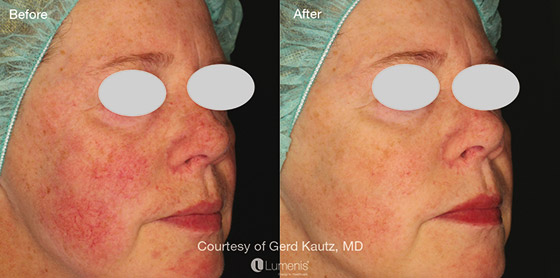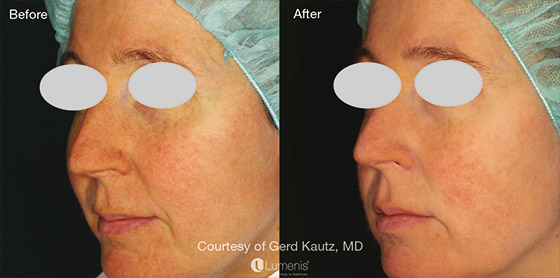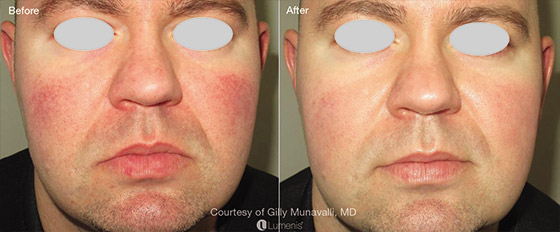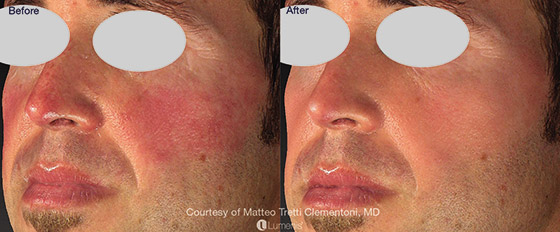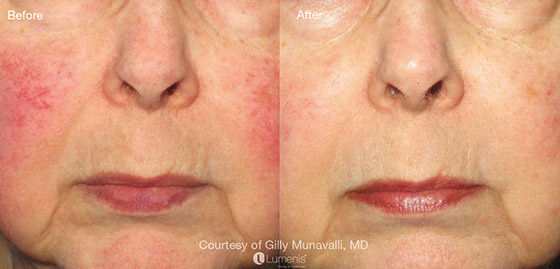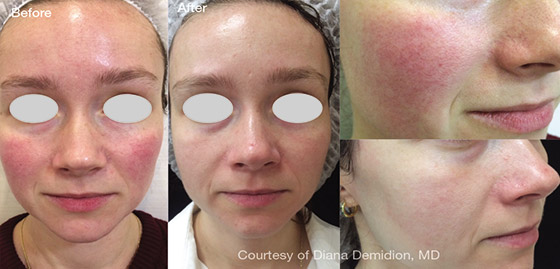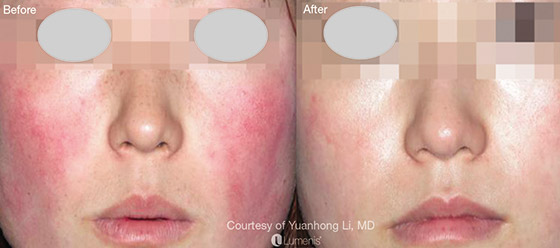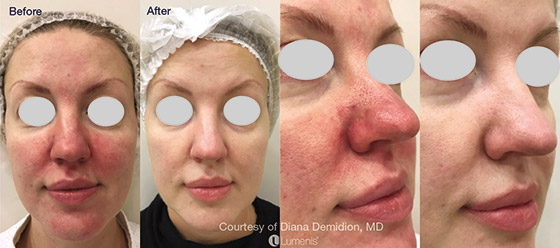
Rosacea is a chronic inflammatory skin condition that primarily affects the central areas of the face. It is commonly characterised by persistent redness, facial flushing and visible blood vessels, and may also involve inflammation of the eyes and eyelids.
In more severe cases, rosacea can lead to thickening or enlargement of the skin, known as phymatous changes.
Symptoms can be aggravated by a range of triggers, including sudden changes in temperature, sun exposure, certain foods, alcohol and some medications. Other skin conditions, including seborrhoeic dermatitis, acne and lupus erythematosus, can sometimes have a similar appearance to rosacea.
Treatment will depend on the type and severity of rosacea and the symptoms being experienced.
For milder cases, treatment options may include prescription topical or oral medications. In certain cases, light-based therapies may be used to reduce persistent redness and visible blood vessels.
Where more significant phymatous changes have developed, treatment options may include electrosurgery, ablative laser treatment or traditional surgery.
Because several other skin conditions can mimic rosacea, an appropriate diagnosis is important before beginning treatment.
If you experience persistent facial redness, frequent flushing, visible blood vessels or other ongoing changes to the skin, a medical assessment can help determine the underlying cause and appropriate treatment options.
A consultation with Dr Nick provides an opportunity to assess your symptoms, identify possible triggers and discuss a treatment plan based on your individual presentation.
Book a consultation to discuss your skin concerns and appropriate treatment options