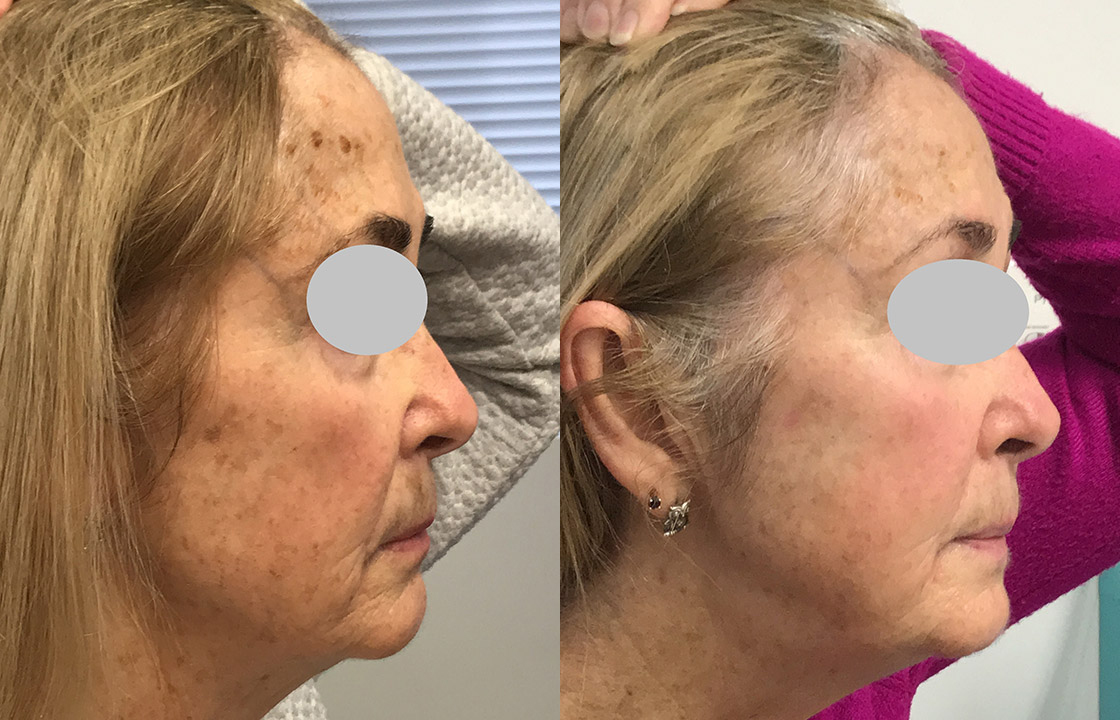
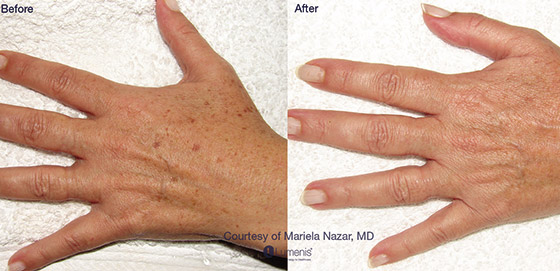
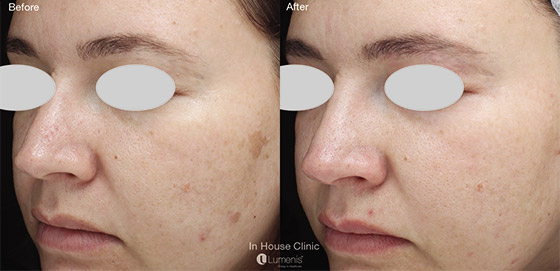
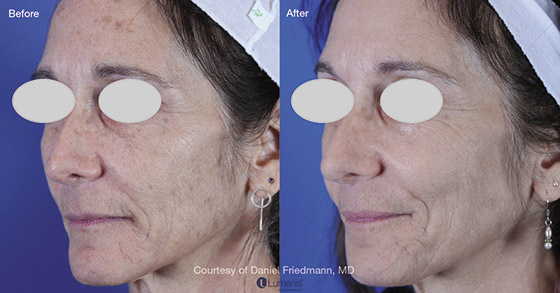
Solar lentigines, commonly referred to as sunspots or age spots, are flat, well-defined areas of increased pigmentation. They usually appear brown or tan and are most commonly found on areas that receive regular sun exposure, such as the face, upper chest, shoulders, arms and hands.
They develop as a result of repeated exposure to ultraviolet (UV) radiation and tend to become more common and noticeable with age.
Although solar lentigines are generally benign, a number of other pigmented skin lesions can have a similar appearance.
Treatment Options
Treatment may be considered where solar lentigines are a cosmetic concern. Depending on the individual lesion and skin type, options may include Intense Pulsed Light (IPL) photorejuvenation or laser-based treatment.
Sun protection is also important in helping to reduce further UV damage and the development of additional pigmentation.
Before treatment, the area should be appropriately assessed to ensure the pigmentation is suitable for cosmetic treatment.
When to seek advice
Any new or changing pigmented lesion should be assessed before treatment, particularly if there has been a change in its size, shape, colour or appearance.
A consultation allows the pigmentation to be examined and suitable treatment options discussed.
Gallery
Concerned about a skin condition?
Book a consultation to discuss your skin concerns and appropriate treatment options